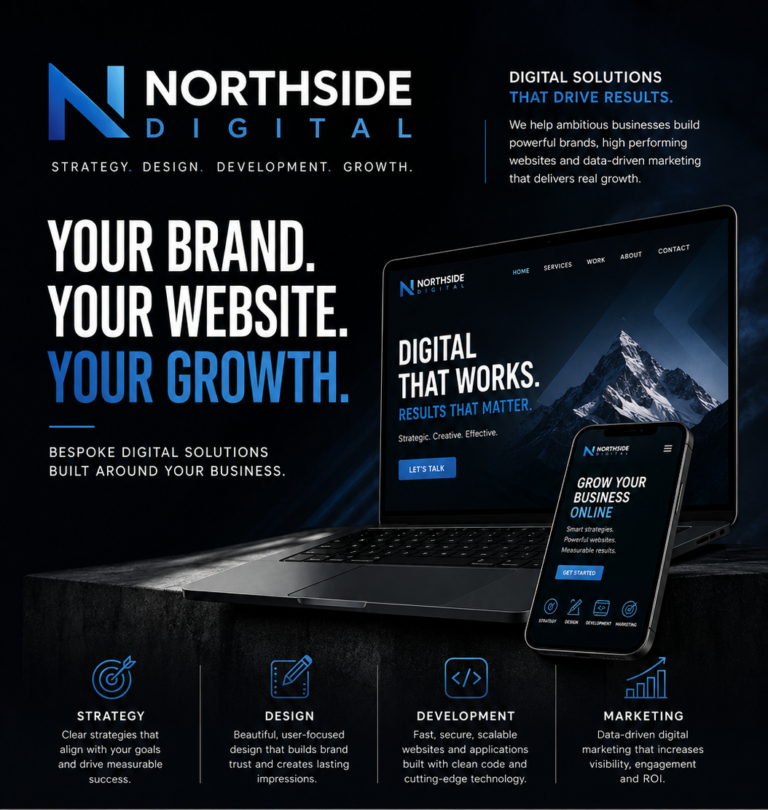
There’s a new kind of red flag in local business marketing. It’s not a bad review or a dodgy website. It’s a poster; the kind with impossibly perfect lighting, hands that don’t quite look right, and a font combination that somehow manages to feel both generic and garish at the same time.
I’m sure you’ve seen them because quite frankly they’re everywhere. Shop windows, community noticeboards, Facebook groups, lampposts. And the uncomfortable truth? Most people clock them straight away.
AI-generated posters have become one of the most recognisable, and most quietly damaging shortcuts a small business can take.
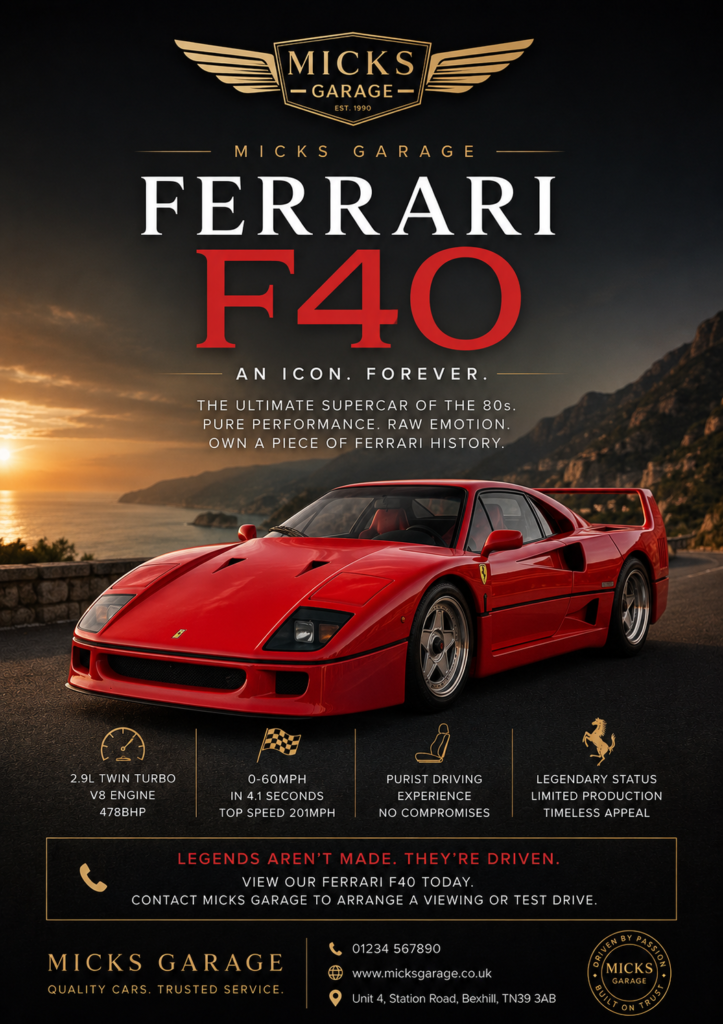

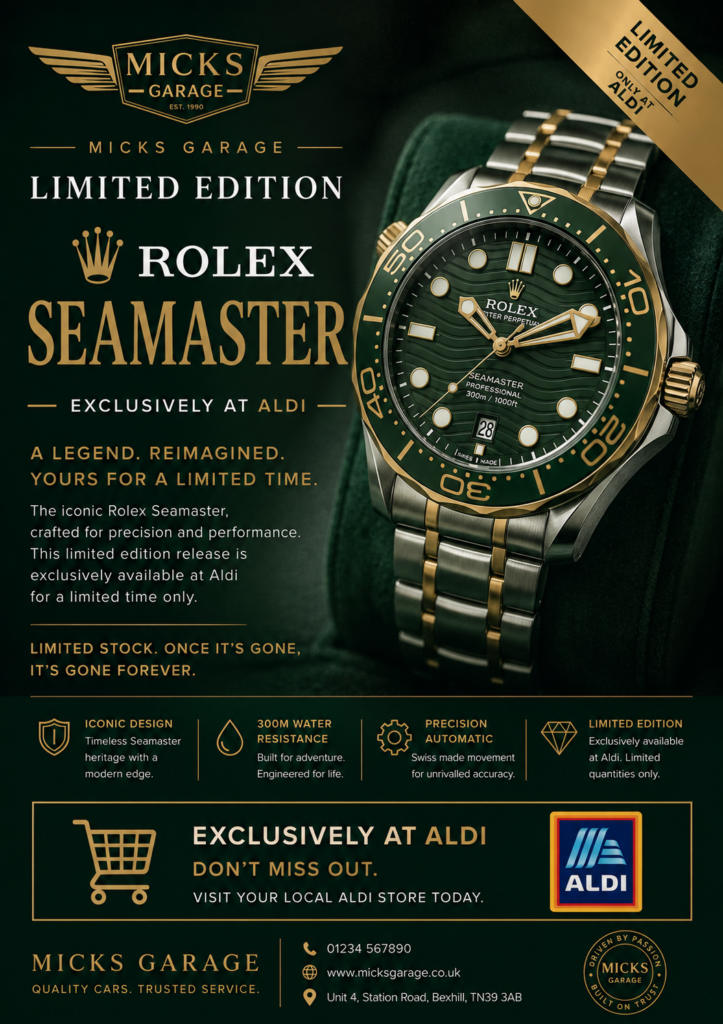
Most People Can Already Spot Them
The general public has become surprisingly good at identifying AI-generated design work. The tell-tale signs are now widely recognised: slightly-off faces (think uncanny valley), textures that look invented rather than photographed, a hyperreal glow that no real environment produces, and an overall aesthetic that screams “nobody actually made this.”
It’s not just designers who notice. Ordinary customers do as well: your neighbours, your community, the people you’re trying to win over – theyr’re are picking up on it too. And when they do, it doesn’t just register as “ah, they used AI.” It registers as something closer to: I’m not sure I trust this business.
That’s a serious problem when your entire proposition as a tradesperson or local service provider is built on trust.
Social Media Is Already Telling You.
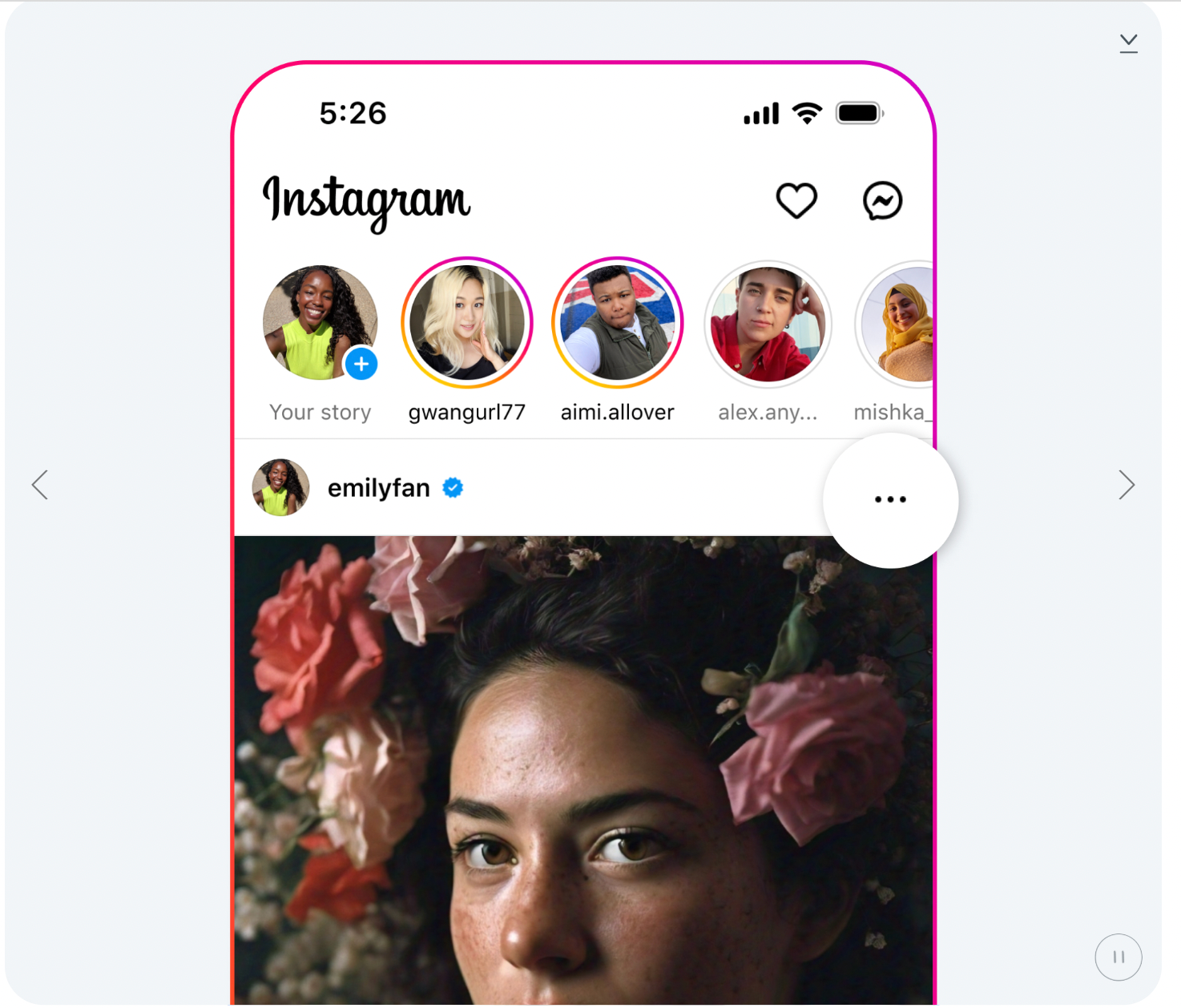
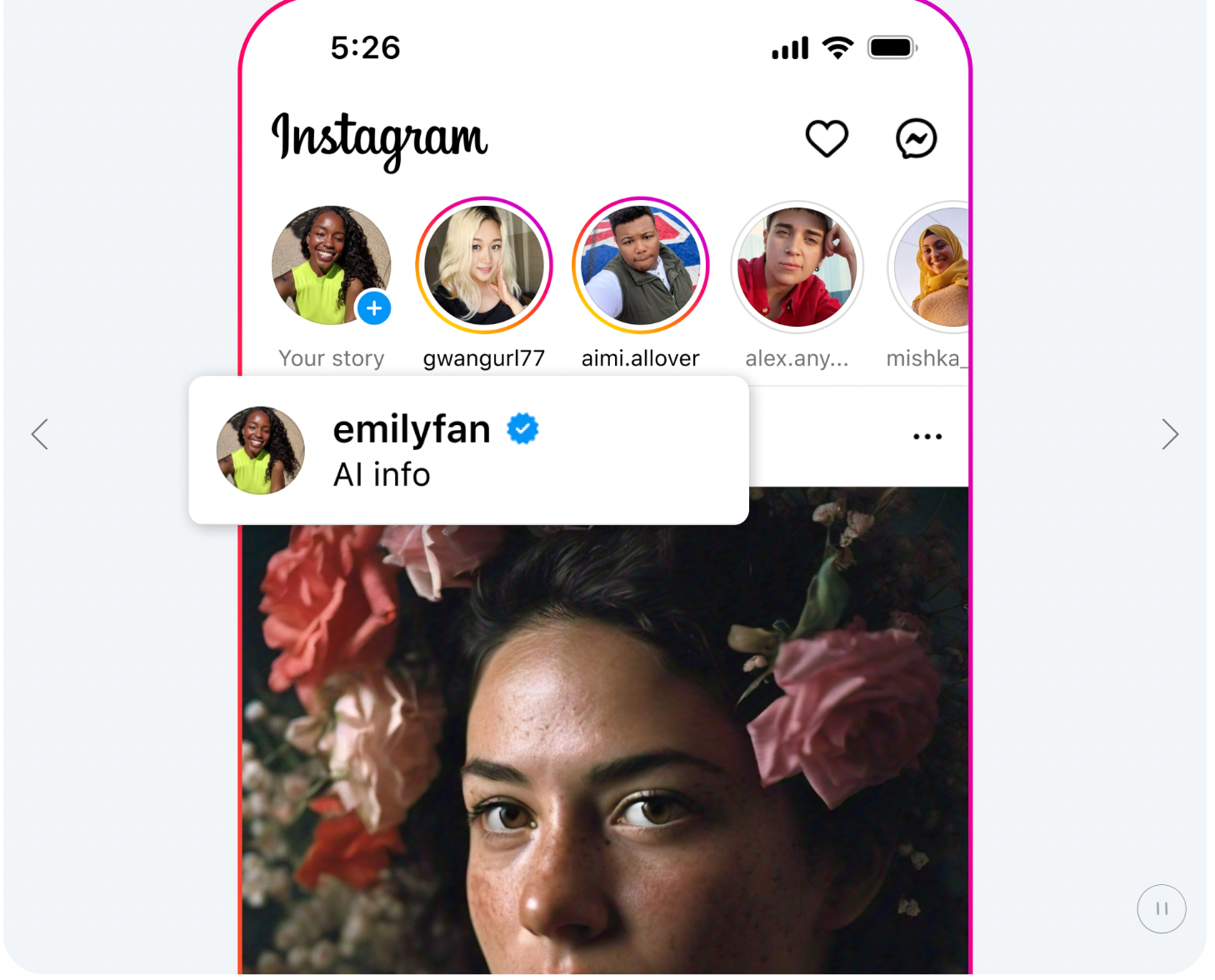
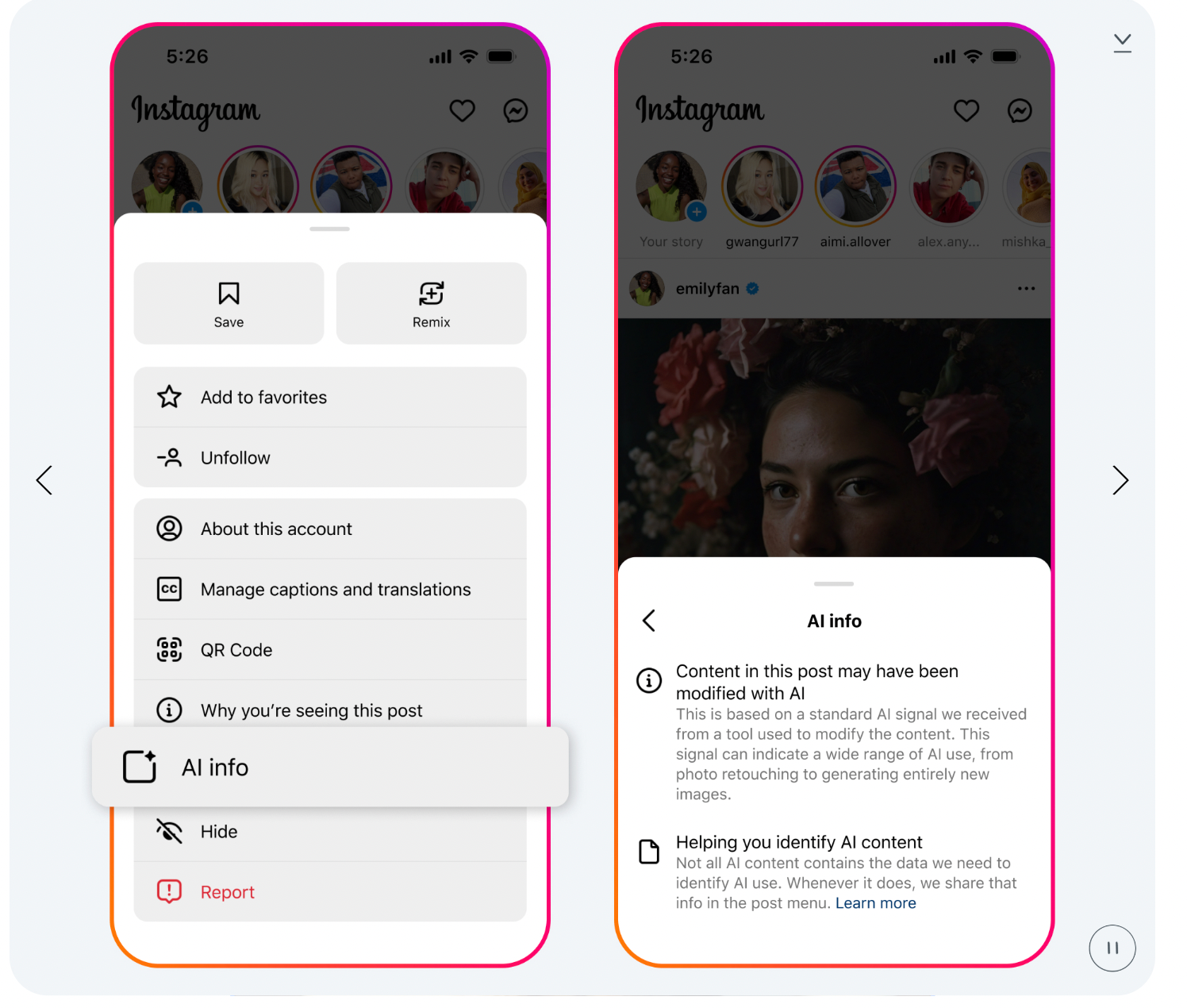
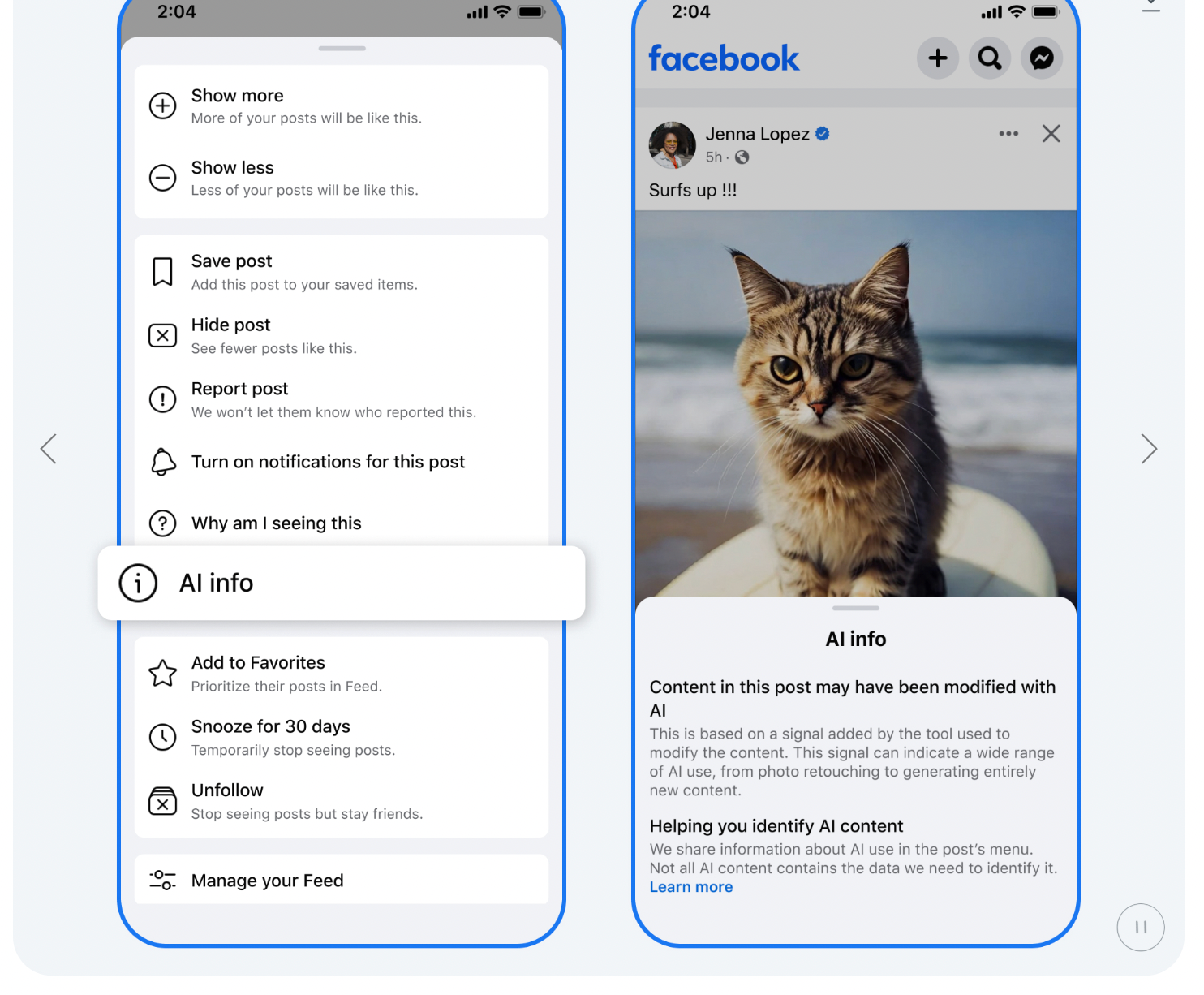
You may (or may not) have noticed that channels such as Meta/Facebook, Instagram, Tiktok etc can determine when content is AI and mark it as so:
What It Actually Signals to a Potential Customer
When a customer sees obvious AI-generated promotional material, a series of unconscious assumptions kick in fast.
They wonder if the work matches the marketing. If the presentation looks cheap and lazy, does the job itself? Tradespeople live and die by the quality of their work and your marketing is often the first sample a customer gets.
They question whether the business is the real deal. Real businesses have real photos, real stories, real people behind them. An AI poster has none of that. It’s an image of an idea of a business and that disconnect is felt even when it’s not consciously identified.
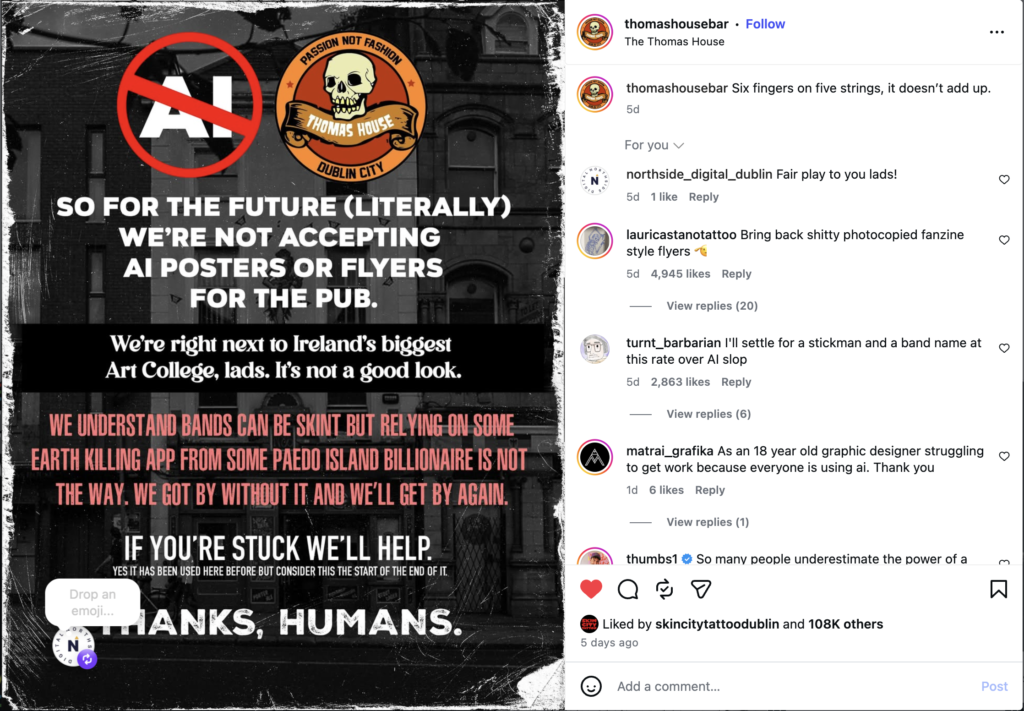
They’re starting to actively avoid it. There’s a growing sentiment particularly in local community groups and on social media of people calling out AI-generated ads when they spot them. Being the subject of that kind of post is not the kind of attention any business wants.
The Irony: It’s Not Even Saving You That Much
The pitch for AI image generation is speed and cost. And yes, it’s fast and cheap. But what’s the actual saving when weighed against the potential damage done to your reputation?
A professionally designed poster or social graphic costs a fraction of what most people assume. And it comes with something AI can never replicate: it’s yours. It has your actual premises, your actual van, your actual face, your actual work. That authenticity is marketing gold for a local business and once the design is done, it keeps working for you.
Meanwhile, an AI-generated poster is indistinguishable from a hundred other businesses using the same tools and the same prompts. You’ve effectively paid to look generic.
What Actually Works Instead
The businesses cutting through right now are doing the opposite of AI-generated polish. They’re posting before-and-after photos of real jobs. They’re sharing a quick phone video of a project in progress. They’re putting a photo of themselves with a satisfied customer on their Google Business Profile. They’re showing up as real people doing real work and it shows.
That’s what builds trust. Not because it’s particularly slick but because it’s genuine, and people can tell the difference.
If you do want professionally designed materials flyers, posters, social graphics, local designers can turn things around quickly and affordably, without the uncanny valley effect. The investment is modest. The return, in credibility and customer confidence, is anything but.
The Long & Short Of It
AI-generated imagery isn’t going away, and there are legitimate ways to use it in your business. But using it to create promotional posters and expecting those posters to win you customers is a gamble that’s becoming increasingly likely to backfire.
Your customers aren’t just buying a service, they’re buying confidence in you. And nothing erodes that confidence faster than marketing that looks like it was generated by a tool that’s never set foot in your area, never seen your work, and has no idea who you are.
Real work deserves real presentation. Don’t let a shortcut be the reason someone scrolls past you.


 How can we help?